Vera Vogel · 7 October 2026
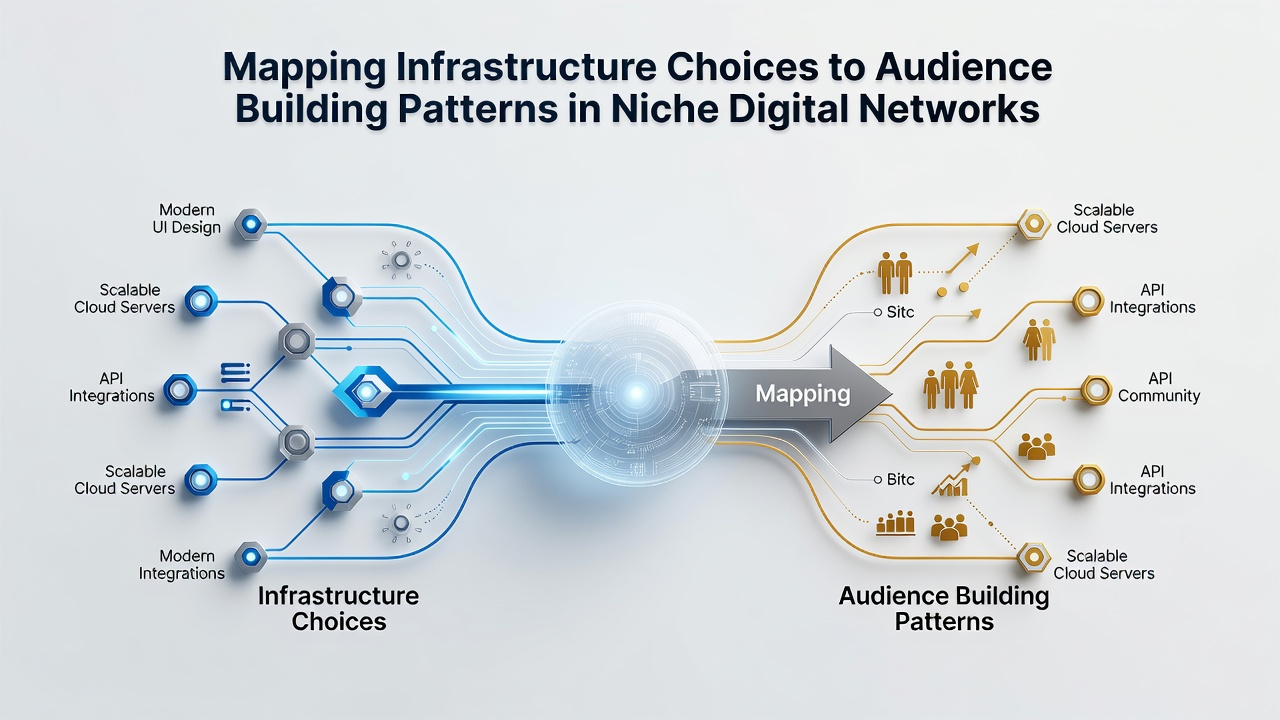
Mapping Infrastructure Choices to Audience Building Patterns in Niche Digital Networks
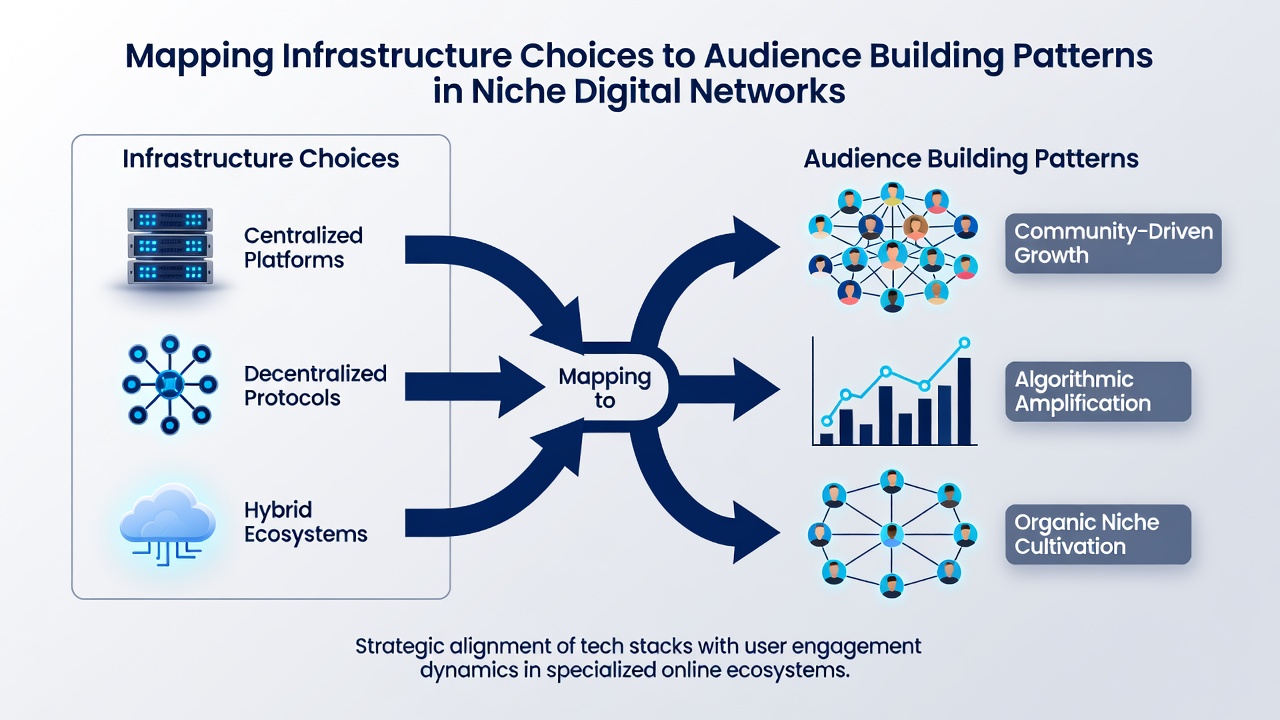
Network builders select server architectures, content delivery systems, and platform integrations that directly influence how communities expand in specialized online spaces, with data from multiple regions showing consistent correlations between these decisions and participation rates. Observers note that centralized hosting often supports rapid scaling in early stages while decentralized options like peer-to-peer protocols tend to foster sustained engagement among dedicated subgroups over longer periods.
Infrastructure Foundations and Their Reach
Choices around database management, API accessibility, and moderation tools determine entry points for new members, and studies from the Pew Research Center indicate that networks with low-latency global distribution see higher retention in hobbyist forums compared to those relying on single-region servers. Researchers have tracked patterns where cloud-based setups enable real-time updates that encourage daily check-ins, whereas on-premise solutions sometimes limit growth to local clusters due to bandwidth constraints.
Those who've examined platform ecosystems find that open-source frameworks allow custom features tailored to niche interests, such as specialized search functions or private group tools, and this flexibility aligns with audience clusters forming around shared expertise rather than broad appeal. Data shows integration with mobile-first designs boosts cross-device participation, particularly in regions with high smartphone usage.
Audience Formation Mechanisms
Patterns emerge when infrastructure supports threaded discussions or recommendation algorithms that surface relevant content without overwhelming users, and evidence from academic analyses reveals higher loyalty in communities where members control visibility settings. Network operators often observe that robust analytics dashboards help identify emerging subgroups early, allowing targeted feature rollouts that reinforce cluster stability.
But here's the thing: when systems prioritize scalability over privacy controls, audience building can shift toward transient visitors instead of core contributors, according to reports tracking user behavior across multiple platforms. Figures from industry analyses highlight how API rate limits affect third-party tool development, which in turn shapes how external promoters discover and direct traffic to these networks.
Connecting Choices to Growth Trajectories
Mapping reveals direct links between tech stacks and engagement curves, with one study revealing that hybrid models combining edge computing and selective decentralization correlate with steadier audience expansion in creative and technical niches. Observers note examples where networks adopting blockchain-based identity verification experienced slower initial adoption yet higher commitment levels from verified participants over time.
Those who've studied this know that content longevity increases when infrastructure includes automated archiving and version control, enabling new users to access historical context that strengthens community identity. As of October 2026, ongoing shifts toward AI-assisted moderation tools continue to influence these dynamics by reducing spam while preserving nuanced discussions in specialized groups.
Researchers discovered that regions with strong data protection regulations see networks favoring encrypted channels, which supports trust-based audience building in sensitive topics like health or finance communities. This contrasts with less regulated environments where open indexing drives broader but sometimes shallower participation.
Observed Patterns Across Ecosystems
Case examples demonstrate how forum software with plugin ecosystems accelerates subgroup formation around specific themes, and data indicates that seamless payment integrations within niche marketplaces extend user lifecycles by enabling direct creator support. Experts have observed that migration paths between infrastructure providers affect momentum, with minimal-downtime transitions preserving established interaction habits.
What's interesting is the role of monitoring systems in predicting audience plateaus, allowing preemptive adjustments like increased storage or enhanced search capabilities that realign growth trajectories. Reports from sources such as the OECD digital economy outlook provide comparative data across countries, underscoring how infrastructure investments vary by regulatory landscape and correlate with distinct participation styles.
Conclusion
Overall patterns show infrastructure decisions shape not only scale but also the character of audience clusters in niche digital networks, with ongoing developments through late 2026 pointing to further refinements in adaptive systems. Those monitoring these spaces track how evolving standards continue to redefine viable pathways for community expansion.